



The honest answer to “which hair dryer is the quietest” is that nobody knows, including us. No brand in this category publishes a measured decibel figure at a stated distance, so every “low noise” and “quiet” claim on every listing is unverified marketing Manufacturer claim.
What we can give you instead is real data. Noise appears in 848 reviews across the 8,261 Canadian reviews we coded — 10.3% of the total, with 33% of those mentions negative. That makes it the fourth most-discussed topic in the category, behind airflow, usability and size Review analysis. That tells you noise matters to buyers, and it tells you roughly how often it disappoints them.
This page explains what actually makes a dryer loud, why the decibel numbers you see elsewhere are not comparable, how to compare dryers yourself in ten minutes, and which models our broader evidence supports.
The short answer on quiet hair dryers
| Question | Answer |
|---|---|
| Which dryer is quietest? | Unknown. No brand publishes a measured figure |
| Is “low noise” on a listing verifiable? | No. It appears on dryers from C$25 to C$630 in our data |
| Does a high-speed brushless motor run quieter? | Unverified either way |
| Does a diffuser or concentrator change noise? | Yes, it changes the airflow and therefore the sound |
| Noise mentions in our dataset | 848 (10.3% of reviews) |
| Of those, negative | 33% |
| How to compare two dryers yourself | Sound meter app, fixed 30 cm, same room and setting |
| What we have measured | Nothing yet — the row reads “not yet tested” everywhere |
One thing worth knowing before you shop: the decibel figure that would let you compare dryers properly does not exist in this category. Any site presenting a dB ranking without a meter and a stated distance is presenting marketing copy as a specification.
Why there is no decibel ranking to give you
This is the section that most guides skip, and it is the reason this page reads differently.
A sound pressure measurement is only meaningful with four things attached: distance, weighting (A-weighted is standard for perceived loudness), background level, and the setting the device was on. None of the four is standardised in this category.
What that means numerically. Sound pressure falls by roughly 6 dB for every doubling of distance. A dryer measured at 10 cm would read about 20 dB higher than the same dryer measured at 1 metre. That 20 dB gap is larger than the difference between any two hair dryers — so a figure without a distance is not just imprecise, it is uninterpretable.
Why the industry has not fixed this. There is no consumer-facing test standard for hair dryer noise, and there is no commercial incentive to create one. A brand claiming “only 68 dB” would have to define the conditions, and those conditions would then be comparable — which is exactly what the vaguer claim avoids.
Our position. We are building a measurement protocol that records sound pressure at 30 cm and at 1 metre, against a recorded background level, with the same meter for every unit. Until that data exists for a model, our comparison tables show “not yet tested” rather than an estimate. See how we test.
What actually makes a hair dryer loud
Three mechanisms, and only one of them is about the motor.
1. Motor speed and type. Conventional dryers use brushed motors turning at roughly 15,000–20,000 rpm. High-speed brushless dryers turn far faster. A brushless motor eliminates the friction and electrical arcing of carbon brushes, which removes one noise source — but the much higher rotational speed can raise the fundamental frequency, and pitch affects perceived annoyance separately from measured loudness.
We have not measured this on any model, and we would be speculating if we told you which way it nets out. Both effects are real; which dominates is an empirical question nobody in this category has published an answer to.
2. Air velocity at the outlet. Noise scales with airflow speed. A dryer pushing air fast to shorten drying time is doing the thing that makes it loud. This is a genuine trade-off rather than a design flaw — and it is why “quiet” and “fast drying” pull against each other.
3. Turbulence and the attachment. Air moving through a grille, a concentrator or a diffuser generates turbulence, and turbulence is noise. Changing the attachment changes the sound. Some reviewers in our data describe the tone shifting noticeably between attachments Buyer feedback.
What is not a meaningful factor: the colourway, the price, and the words “professional” or “salon”. None of them appears in our noise complaint data in any pattern.
What our review data says about noise
848 mentions, 33% negative, and the complaints cluster in a specific way.
| Topic | Mentions | Negative share |
|---|---|---|
| Airflow and drying speed | 1,585 | 35% |
| Usability and controls | 1,579 | 39% |
| Size and storage | 1,429 | 26% |
| Weight | 1,318 | 28% |
| Noise | 848 | 33% |
| Heat and temperature | 1,093 | 54% |
| Durability | 1,120 | 84% |
How to read that. Noise sits in the middle of the pack — worse than size and weight, notably better than heat and durability. It is a real irritant but not the category’s biggest failure. A third of mentions being negative means two thirds of people who bring up noise are fine with it Review analysis.
What reviewers actually describe:
- High-pitched whine rather than raw volume — the most common phrasing Review analysis
- Needing to raise the TV or leave the room while drying Buyer feedback
- Early-morning use in a shared home as the specific context, which is probably why noise matters at all Review analysis
That last point is worth dwelling on. Noise is rarely a problem in the abstract. It becomes a problem when you dry your hair at 6am and someone is asleep. If that is not your situation, noise should rank lower in your decision than weight, heat control or warranty.
A ten-minute method to compare dryer noise yourself
Since no published figure exists, the comparison you can do yourself is more reliable than anything you can read.
- Install a sound meter app on your phone. Accuracy against a calibrated meter is poor, but consistency between two measurements on the same device is what you need
- Fix the distance at 30 cm. Use a ruler or a marked string. Distance dominates everything else
- Measure the background first. Note the room’s level before switching anything on
- Use identical settings. Same heat step, same speed step. Changing either invalidates the comparison
- Measure for 10 seconds and take the average, not the peak — peak is dominated by the initial spin-up
- Test with the same attachment on both dryers, and then again with the concentrator, since the attachment changes the sound
- Note the pitch, not just the number. A dryer can measure the same and still be more annoying if its tone is higher
What this gives you. A ranking that is valid for you, in your bathroom, on your settings — which is more than any published comparison in this category can offer.
What it does not give you. A number you can compare against a stranger’s review. Phone microphones vary, and so do rooms.
Models our broader evidence supports
To be explicit about the limitation: the products below are not ranked on noise. We have not measured their sound pressure, and neither has anyone else publishing a comparison. They are ranked on the evidence we actually have — rating, seller structure, price band and complaint rate — with the noise caveat standing.
If noise is your deciding factor, use the method above on a returnable purchase rather than trusting any ranking, including ours.
1. Dreame Pocket Pro — best-rated in the premium band
about C$160 · 4.6★ (252 ratings) · about 163 units/month · BSR #52 · Buy Box: Dreame Technology HK
What we liked
- 4.6★ — the joint-highest rating above C$120 in our dataset Amazon.ca data
- Dual voltage, and a diffuser included and matched to the barrel Manufacturer claim
- Brand-operated listing, single seller Amazon.ca data
- Sits in the price band where complaint rates fall to 9.6% Review analysis
What we didn’t
- Only 163 units a month in Canada, so long-term ownership data is thin Amazon.ca data
- BSR #52, the weakest ranking of our picks Amazon.ca data
- We have not measured its noise, so we cannot tell you whether it is quiet (our test protocol)
Skip if: you want measured proof it is quiet. Nobody has that for any dryer.
Check price at Amazon.ca · Read our full Dreame review
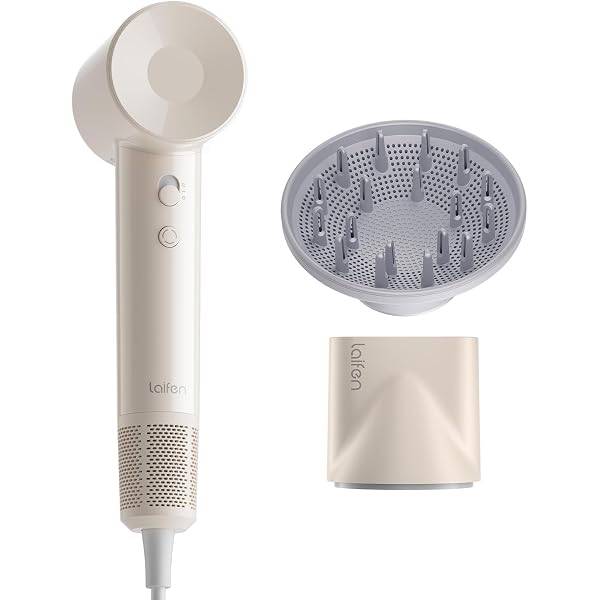
2. Laifen Air — best value in the mid band
about C$100 · 4.5★ (278 ratings) · about 534 units/month · BSR #25 · Buy Box: Laifen Official
What we liked
- The highest unit volume in the Laifen range, so Canadian buyers are finding it Amazon.ca data
- Brand-operated listing with a single seller — one warranty counterparty Amazon.ca data
- High airflow at lower heat, which is the approach the whole premium category uses Manufacturer claim
What we didn’t
- Only 4 months on sale, so Canadian ownership history is short Amazon.ca data
- No diffuser as standard — the Air Diffuser at the same price includes one Amazon.ca data
- Noise not measured, on this or any model we cover (our test protocol)
Skip if: you want a diffuser included — buy the Air Diffuser at the same price.
Check price at Amazon.ca · Read our full Laifen guide
3. Laifen SE Lite — the largest review base among our picks
about C$110 · 4.5★ (550 ratings) · about 448 units/month · BSR #7 · Buy Box: Laifen Official
What we liked
- 550 ratings — the largest review base of any Laifen model in Canada Amazon.ca data
- BSR #7, the highest category ranking in the Laifen range Amazon.ca data
- Diffuser included as standard Manufacturer claim
What we didn’t
- Sales momentum is slightly negative at roughly −11% month over month Amazon.ca data
- Heavier than the Air, which matters over a long session Review analysis
- Noise not measured (our test protocol)
Skip if: your hair is fine — the Air is cheaper and better suited.
4. Slopehill 1902 Ionic — the volume leader at a budget price
about C$43 · 4.5★ (22,195 ratings) · about 8,660 units/month · BSR #1 · Buy Box: Stellartech (3 sellers)
What we liked
- 22,195 Canadian ratings at 4.5★ — the largest review base in our dataset Amazon.ca data
- BSR #1 and roughly 8,660 units a month — the best-selling hair dryer in Canada Amazon.ca data
- Roughly a tenth of a Dyson Supersonic’s price Amazon.ca data
What we didn’t
- Under-C$50 band, where our data shows a 30.3% complaint rate across 3,259 reviews Review analysis
- The Buy Box is held by Stellartech, a third party, with three competing sellers — no single warranty counterparty Amazon.ca data
- Conventional design, not brushless Manufacturer claim
- Noise not measured (our test protocol)
Skip if: you want a clear warranty counterparty — see our Slopehill review for that analysis.
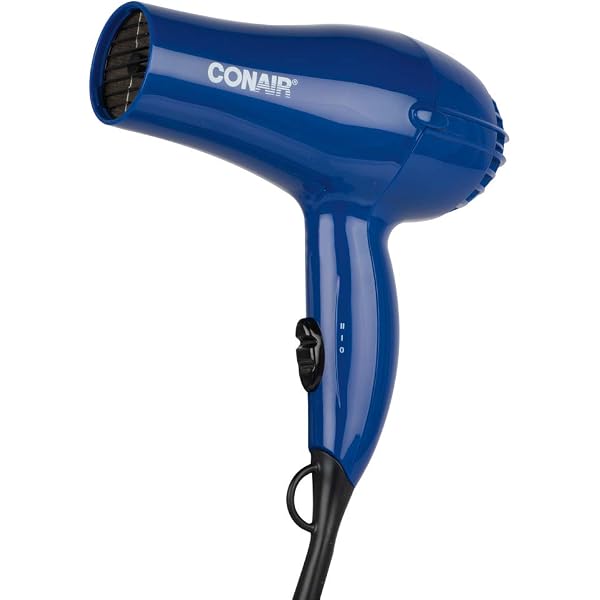
5. Conair 318RC — the lowest-risk cheap dryer
about C$25 · 4.4★ (9,491 ratings) · about 1,957 units/month · BSR #4 · Buy Box: Amazon (3 sellers)
What we liked
- 9,491 ratings at 4.4★ and 6.5 years on sale — a stable, well-evidenced listing Amazon.ca data
- Conair has supported Canadian warranties for decades, which matters most at this price Amazon.ca data
- Sold in Costco Canada, Walmart Canada, Canadian Tire and Best Buy, so you can listen to it in person before buying Amazon.ca data
What we didn’t
- Not a high-speed brushless dryer, so it relies more on heat than airflow Manufacturer claim
- Budget band — the 30.3% complaint rate applies Review analysis
- Three sellers compete with Amazon holding the Buy Box Amazon.ca data
- Noise not measured (our test protocol)
One genuine advantage for this specific question: because it is sold in physical stores, you can hear it before you buy it. For a question nobody has measured, that is worth more than any online comparison.
Skip if: your hair is thick or long — see our thick hair guide.
Quiet hair dryer comparison table
| Dreame Pocket Pro | Laifen Air | Laifen SE Lite | Slopehill 1902 | Conair 318RC | |
|---|---|---|---|---|---|
| Price (approx.) | about C$160 | about C$100 | about C$110 | about C$43 | about C$25 |
| Amazon.ca rating | 4.6★ | 4.5★ | 4.5★ | 4.5★ | 4.4★ |
| Ratings count | 252 | 278 | 550 | 22,195 | 9,491 |
| Est. units/month | 163 | 534 | 448 | 8,660 | 1,957 |
| Category BSR | 52 | 25 | 7 | 1 | 4 |
| Motor type (claim) | High-speed brushless | High-speed brushless | High-speed brushless | Ionic conventional | 1875W conventional |
| Price band | Premium | Mid-premium | Mid-premium | Budget | Budget |
| Complaint rate in band | 9.6% | 9.6% | 9.6% | 30.3% | 30.3% |
| Buy Box holder | Dreame Technology HK | Laifen Official | Laifen Official | Stellartech (3rd party) | Amazon |
| Audible in a store before buying | No | No | No | No | Yes |
| Measured dB @ 30 cm | Not yet tested | Not yet tested | Not yet tested | Not yet tested | Not yet tested |
| Measured dB @ 1 m | Not yet tested | Not yet tested | Not yet tested | Not yet tested | Not yet tested |
| Measured pitch / tone | Not yet tested | Not yet tested | Not yet tested | Not yet tested | Not yet tested |
Price, rating and sales data checked 2026-10-02 on Amazon.ca. The three measured rows are the ones this page is actually about, and they are all empty. That is the state of this category, not a gap in our research.
What would change this page
We would rather tell you what we are doing about it than leave the question open.
Our measurement protocol will record, for every unit:
- Sound pressure at 30 cm and at 1 metre, against a recorded background level
- A-weighted, using the same meter for every unit
- On a fixed speed and heat setting, stated on the page
- With and without the concentrator, since the attachment changes the sound
- Peak and average, because spin-up dominates a peak reading
When that data exists, this page will carry a real ranking and the table above will have numbers in it. Until then, the honest answer is the one at the top of this page.
If you own a dryer and want to help, tell us the model and what you measured at editorial@hairdryerlab.ca. Individual reports do not change a recommendation, but they help us decide what to test next.
Frequently asked questions
Which hair dryer is the quietest? We cannot tell you, and neither can anyone else publishing a comparison without a sound meter. No brand in this category publishes a measured decibel figure at a stated distance, so there is no verified ranking to report. What we can give you is the complaint pattern from 8,261 reviews and a method to compare dryers yourself.
Why do hair dryers not publish decibel ratings? There is no industry-standard test protocol for it — no agreed distance, no agreed weighting, no agreed background level. A figure measured 10 cm from the outlet and one measured at 1 metre would differ by around 20 dB, which is a larger gap than between any two dryers in this category.
What actually makes a hair dryer loud? Three things: how fast the motor spins, how fast the air leaves the barrel, and the tone or pitch of that sound. A high-speed brushless motor spins far faster than a conventional one, and pitch affects perceived annoyance independently of measured loudness. We have not measured any of these on any model.
Is a high-speed brushless hair dryer quieter than a conventional one? We cannot confirm that either way, and we will not guess. The mechanism is plausible in both directions: brushless motors eliminate brush friction, but they spin far faster, which can raise pitch. Without measurement this is speculation, so we treat it as unverified.
How can I compare hair dryer noise myself? Use a phone sound-meter app at a fixed 30 cm distance, in the same room, at the same time of day, on the same heat and speed setting. Absolute numbers from a phone are not accurate, but the comparison between two dryers measured the same way is meaningful. Record the background level first.
Why do people search for hair dryer white noise? Some buyers use a hair dryer as a white noise generator for sleep, which appears in our keyword data at around 90 searches a month. That is a different use case from drying hair, and we would not recommend running a hair dryer unattended as a sleep aid — it is a mains-voltage heating appliance.
Our verdict on quiet hair dryers
There is no verified ranking of hair dryer noise, and this page will not invent one.
If noise is your deciding factor, buy from somewhere with a return window and test it yourself using the method above. That is a more reliable path than any comparison you can read, including ours.
If noise is one factor among several, the products above are ranked on evidence we do have: the Dreame Pocket Pro at about C$160 and Laifen Air at about C$100 both sit in the price band where complaint rates fall to 9.6%, and the Conair 318RC at about C$25 has the specific advantage of being audible in a physical store before you buy.
And treat every “low noise” claim on every listing as unverified — including the premium ones. It appears from C$25 to C$630 in our data with nothing behind it. When our measured figures land, this page changes.